Botox is a well-known brand name for botulinum toxin type A, a purified protein that relaxes the muscles it is injected into. Used in tiny, measured doses, it softens the lines that form when we frown, raise our eyebrows or smile. Several brands are available, and doctors often use the general term "anti-wrinkle injections". Botulinum toxin is a prescription medicine and should be given only by a qualified, trained doctor. It also has medical uses, such as treating excessive sweating, some types of migraine and muscle spasm. This guide explains what botulinum toxin can and cannot do, what to expect at a treatment session, how long results last, and the side effects to know about.
The short answer
Botulinum toxin softens "expression lines": frown lines between the eyebrows, forehead lines and crow's feet around the eyes.
It does not fill hollows, lift sagging skin or remove deep folds. Fillers, thread lifts or surgery treat those.
The effect starts within a few days, is fully seen at about 2 weeks, and usually lasts around 3 to 4 months. Repeat treatments are needed to keep the result.
Common side effects are mild and temporary: small bruises, redness or a headache. A drooping eyelid or eyebrow can occur and usually settles over weeks.
It is not given during pregnancy or breastfeeding, or to people with certain nerve and muscle conditions.
What it treats
Frown lines (between the eyebrows). What it does: Relaxes the muscles that pull the brows together. What to know: The most commonly treated area.
Forehead lines. What it does: Softens horizontal lines when the eyebrows are raised. What to know: Usually treated with the frown lines so the brows stay balanced.
Crow's feet. What it does: Softens lines at the outer corners of the eyes when smiling. What to know: Small doses keep a natural smile.
Other areas. What it does: Neck bands, a gummy smile, a dimpled chin, jaw muscle bulk. What to know: Need careful assessment and experience.
Medical uses. What it does: Excessive underarm or palm sweating, some chronic migraine, muscle spasm. What to know: Different doses and assessment from cosmetic treatment.

What happens at a treatment
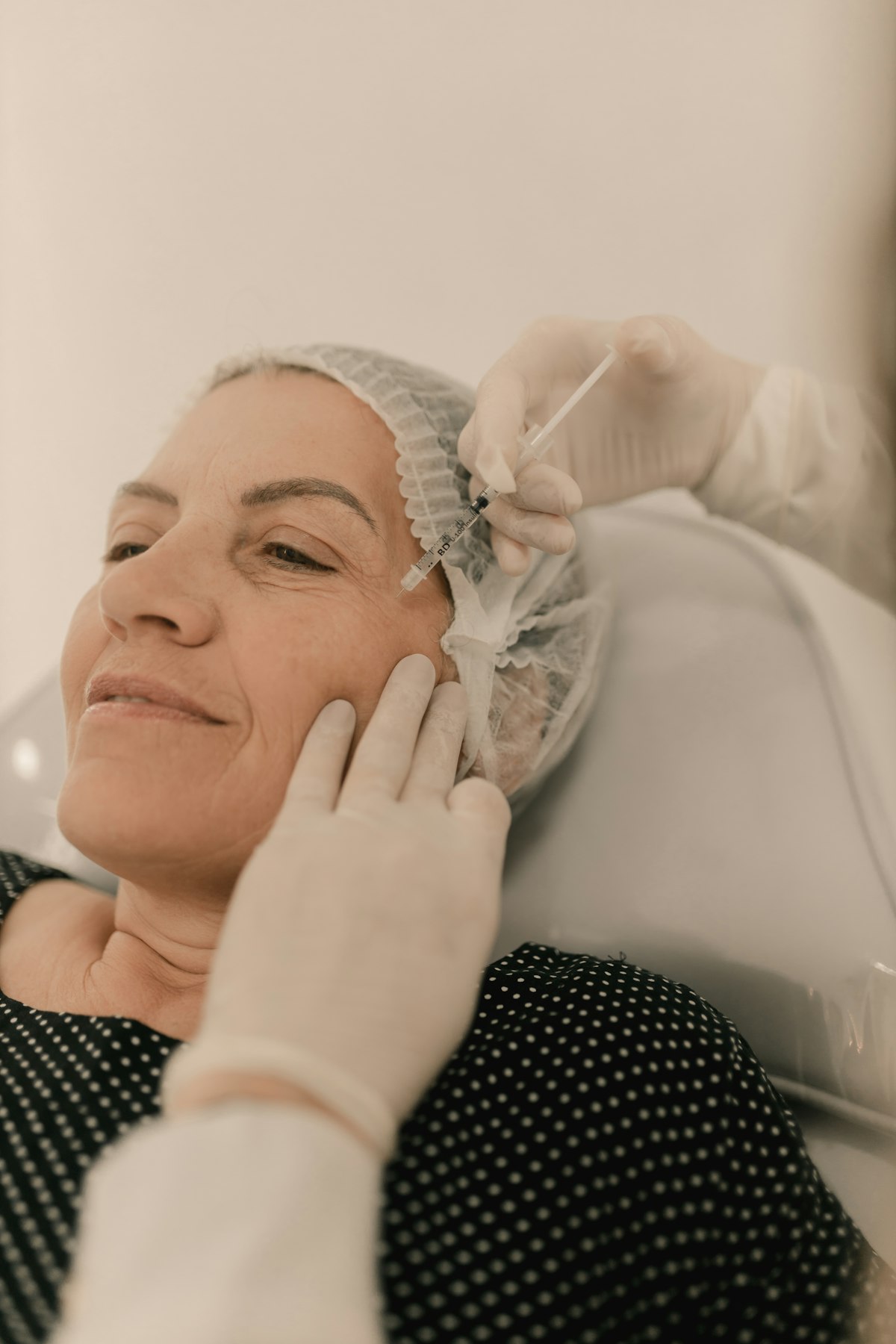
At the first visit the doctor asks about your health and medicines, looks at your face at rest and while you move it, and discusses what result you want. Photographs may be taken. The skin is cleaned, the injection points are marked, and a very fine needle is used to give a few small injections into specific muscles. It takes about 10 to 20 minutes. Most people describe a brief pinching feeling; an ice pack or numbing cream can help. You can usually go back to normal activities the same day. A review visit after about 2 weeks lets the doctor check the result.
Aftercare
Do not rub or massage the treated areas for the rest of the day.
Avoid lying flat, strenuous exercise, saunas and heavy make-up for the rest of the day, or as your doctor advises.
Small bumps where the needle went in settle within an hour or so.
Do not have another dose elsewhere before the review visit.
Side effects and risks
Most side effects are mild and short-lived:
Pain, redness, swelling or bruising at the injection sites.
Headache or mild flu-like symptoms for a day or two.
A drooping eyelid or eyebrow, uneven eyebrows, or a "frozen" look if too much is given or the toxin spreads to nearby muscles. These wear off as the effect fades, usually within weeks.
Dry or watery eyes after treatment around the eyes.
Rarely, the effect of the toxin can spread beyond the injected area, causing weakness, difficulty swallowing, speaking or breathing. This is very uncommon at cosmetic doses but is a medical emergency: call 108 or go to emergency straight away.
Who should not have it
Women who are pregnant or breastfeeding.
People with a nerve or muscle disease such as myasthenia gravis.
People with an infection or active skin problem at the injection site.
People who have had an allergic reaction to botulinum toxin before.
Tell the doctor about all your medicines, including blood thinners and some antibiotics, and about any previous injections or fillers.
How to choose where to have it
Choose a qualified doctor who examines you first, explains the product and dose, talks about side effects, and offers a review appointment. Be cautious of injections offered at parties, at salons without a doctor, or at very low prices, because the product may not be genuine or stored correctly. Ask which product is used and check that it comes from a sealed, approved pack.
Questions worth asking at your consultation
Which lines can anti-wrinkle injections improve on my face, and which need another treatment?
Which product and how many units will you use?
How natural will I look? Will I still be able to frown and smile?
When should I come back for review, and how often will I need repeat treatment?
Planning your consultation
Bring a list of your medicines and tell the doctor about pregnancy, breastfeeding, nerve or muscle conditions and previous cosmetic treatments. Read more about botulinum toxin, wrinkle removal and thread lift at Sparsh, or our guide to thread lifts in Nashik.
Dr. Sachin B. Wagh is a plastic surgeon with D.N.B. and M.Ch. in plastic surgery and more than 15 years in practice. At Sparsh Clinic, the first visit is a private consultation: examination, a discussion of your goals and options, and a direct recommendation.
To book, call Sparsh Plastic & Cosmetic Surgery Clinic on +91-253-2319098 or use the contact form at sparshnashik.com. The clinic is at Vaijayanti Apartments, opposite IMRT (KTHM College), Gangapur Road, Nashik 422002. OPD is Monday to Saturday, 8:00 am to 8:00 pm.
This guide is general information about botulinum toxin (anti-wrinkle) injections. It is not a diagnosis or a promise of a result. Botox is a registered brand name of a botulinum toxin product. Whether treatment suits you, and the product and dose, are decided after an examination by the doctor.