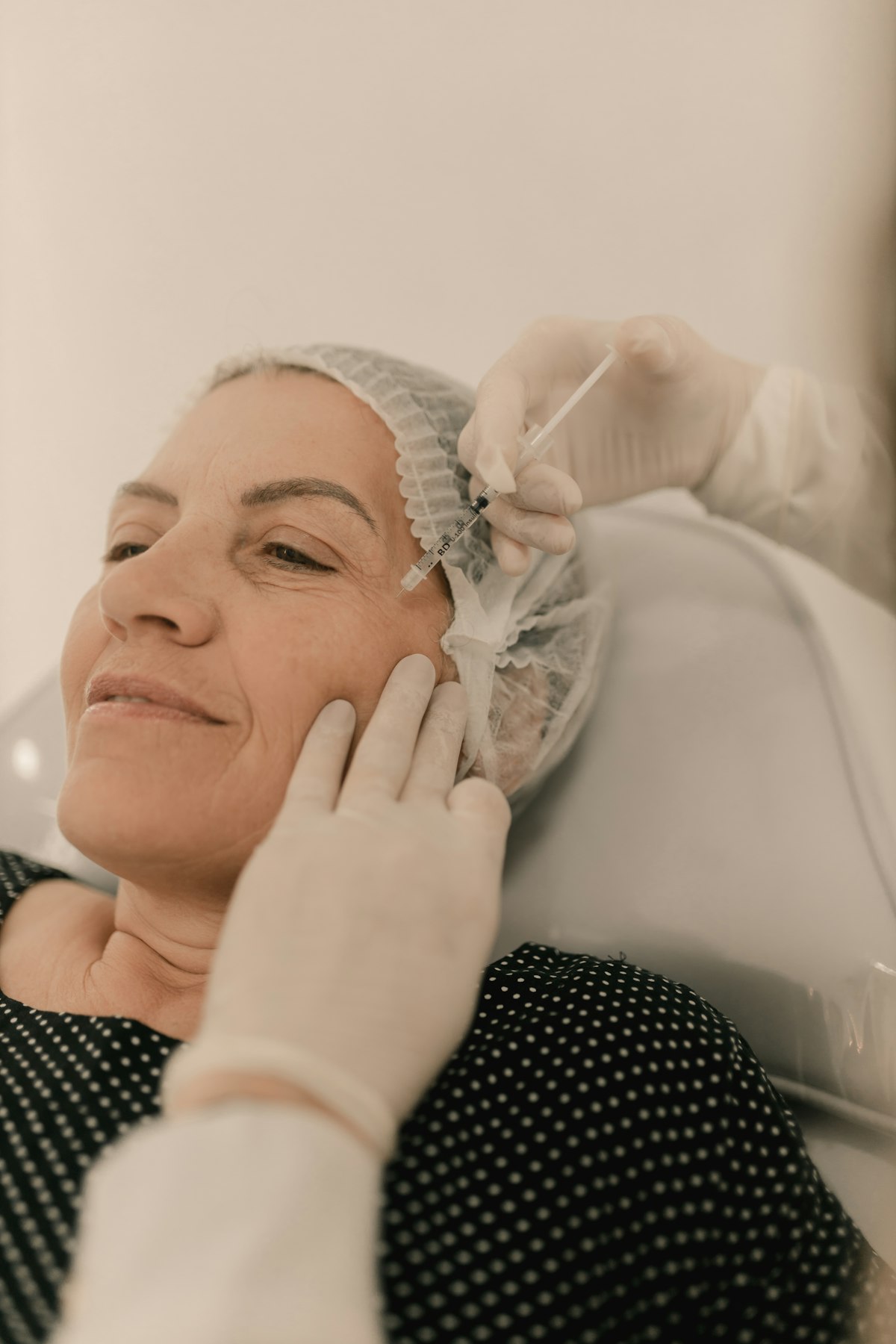
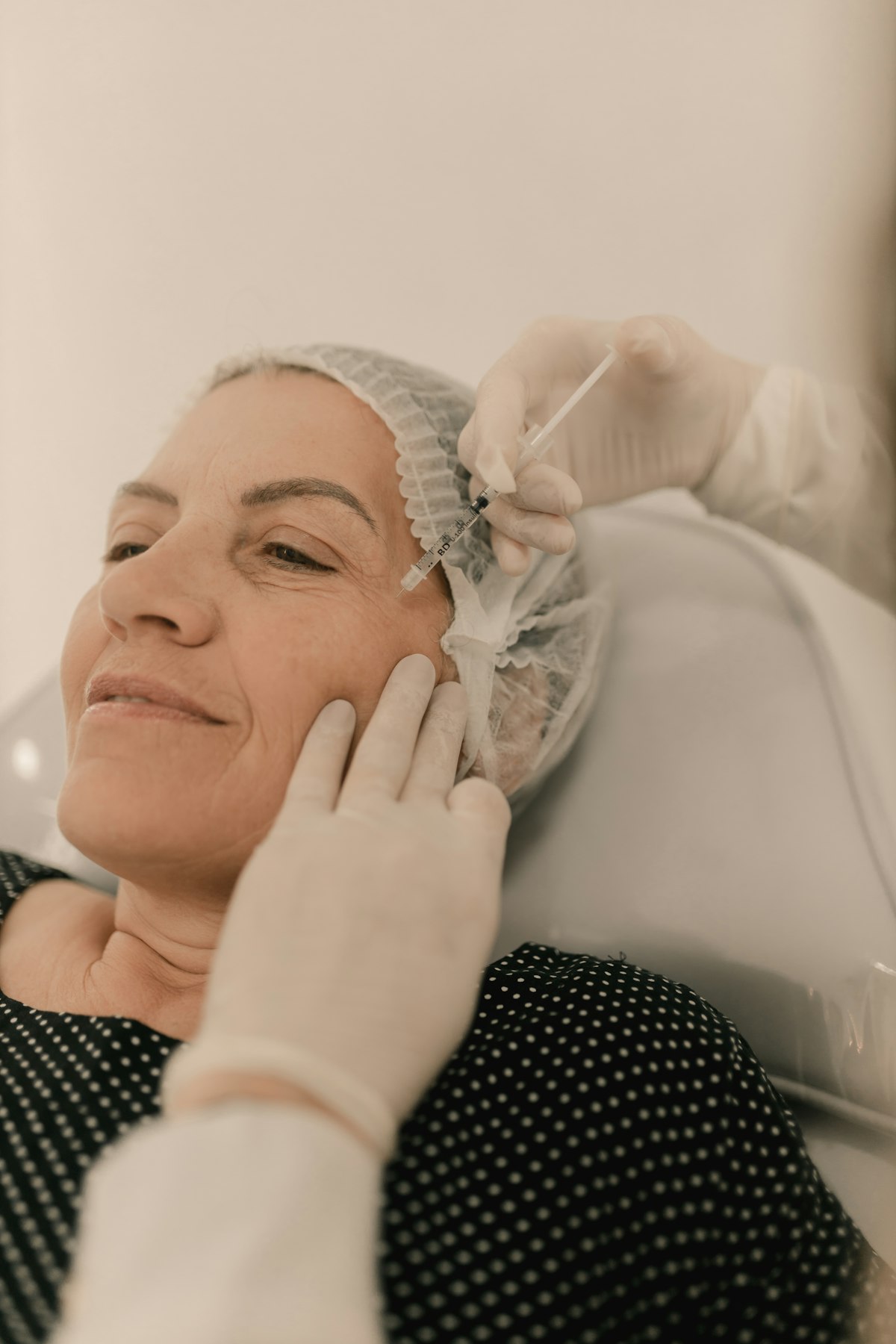
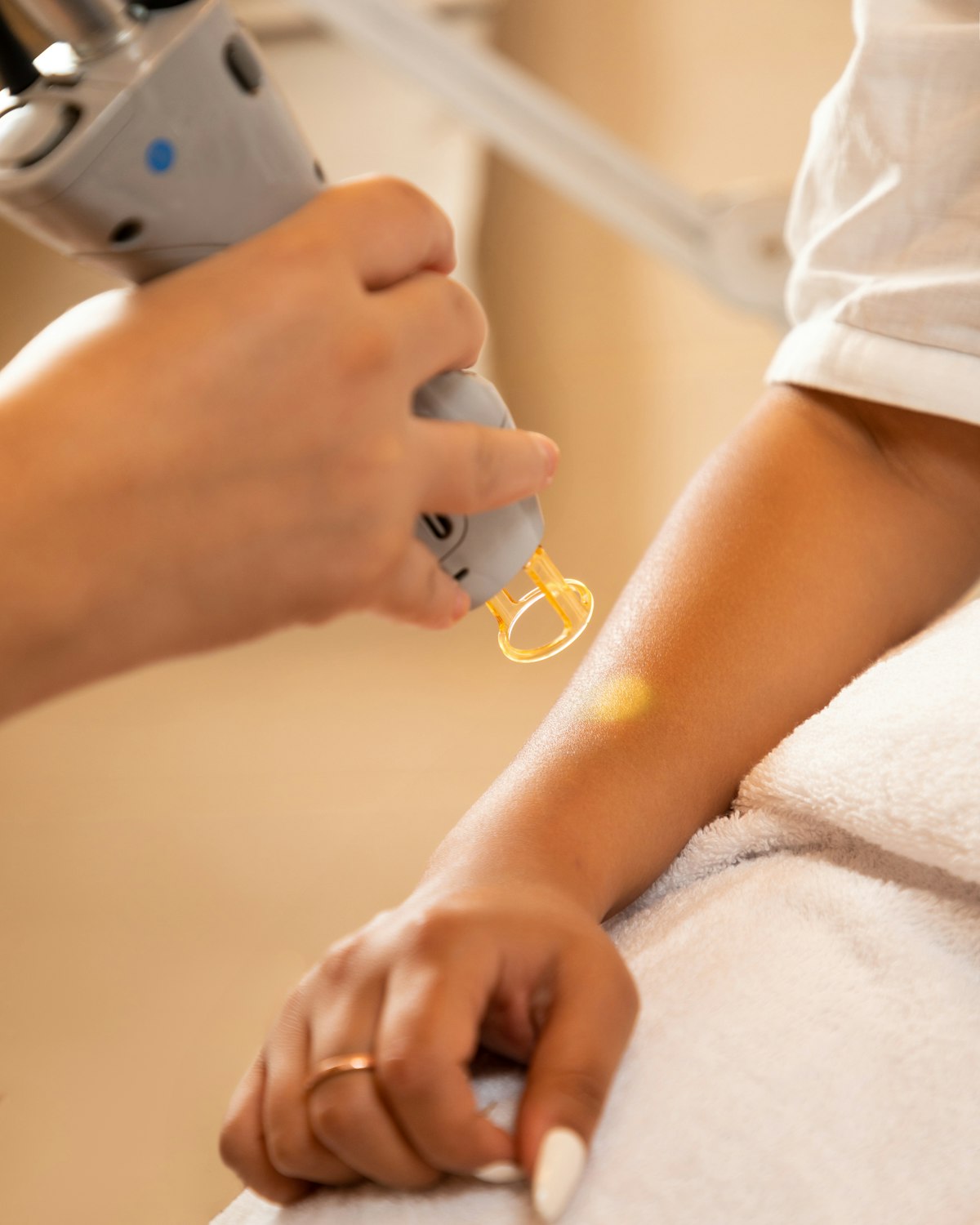
With age, the cheeks, jawline and brows slowly descend, and early jowls appear. A thread lift is a minimally invasive treatment that uses fine dissolvable threads placed under the skin to lift these areas a little and encourage the skin to make new collagen. It is sometimes called a "lunchtime lift" because it is done under local anaesthesia and most people go home straight away. It is not a replacement for a surgical facelift. This guide explains who it suits, what happens, how long results usually last, and how it compares with other options.
The short answer
A thread lift uses dissolvable, barbed threads placed under the skin to lift sagging tissue in the cheeks, jawline, brows or neck.
It suits early, mild sagging, often in people in their late 30s to early 50s. It does not suit heavy jowls or a lot of loose neck skin.
It takes about an hour under local anaesthesia, and most people return to work within a few days.
Results are subtle and temporary, usually lasting about one to three years, as the threads dissolve.
Swelling, bruising, tightness and dimpling of the skin are common for a few days. Threads can occasionally be felt or poke through, and may need removal.
What a thread lift can and cannot do
Suits. Thread lift: Early, mild sagging of the cheeks, jawline or brows. Surgical facelift: Moderate to marked sagging, heavy jowls, loose neck skin.
Anaesthesia. Thread lift: Local. Surgical facelift: Usually general, or local with sedation.
Cuts. Thread lift: Tiny entry points, no stitched scars. Surgical facelift: Incisions around the ears and hairline.
Downtime. Thread lift: A few days of swelling and bruising. Surgical facelift: About two weeks or more before most people go out.
How long results last. Thread lift: Usually about 1 to 3 years. Surgical facelift: Many years.
Effect. Thread lift: Subtle lift and some collagen stimulation. Surgical facelift: Larger, longer-lasting change.
These are typical ranges. Your surgeon will advise what fits your face.

Who is a good candidate
Adults with early signs of sagging, such as softening of the jawline, early jowls, or slightly lowered brows, and good skin quality.
People who want a subtle refresh with little time off, and who accept that the result is temporary.
People who have had a facelift in the past and want a small top-up.
A thread lift is less suitable for heavy or very loose skin, a lot of fat under the chin or neck, or for people who expect a dramatic change. Tell the surgeon about blood-thinning medicines such as aspirin, diabetes, skin infections, a tendency to keloids, autoimmune conditions, and any fillers or threads you have had before. It is not done during pregnancy.
What happens on the day
The surgeon marks the direction of lift with you sitting up. The skin is cleaned and numbed with local anaesthetic. Through tiny entry points, often near the hairline or in front of the ear, a thin needle or cannula places the threads under the skin. Small barbs or cones on the threads grip the tissue, and the surgeon gently lifts it into position before trimming the thread ends. The treatment usually takes about an hour, and you go home the same day.
Recovery and aftercare
First few days: swelling, bruising and a tight or pulling feeling are common, usually settling within about five days. Some puckering or dimpling of the skin can appear and usually smooths out. Cold packs and simple painkillers advised by the clinic help.
Sleep on your back with the head raised for the first few nights, and avoid lying face down.
Avoid wide yawning, chewing hard food, and facial massage for the first couple of weeks, so the threads are not pulled out of place.
Do not wash or rub the face hard for the first day, and ask when you can restart make-up and skin care products.
Avoid strenuous exercise, saunas and dental work for about two weeks, or as your surgeon advises.
Most people return to work within a few days.
The lift is visible straight away, and some of the effect comes from new collagen over the following weeks.
Risks to discuss
Common, temporary effects include swelling, bruising, pain, tightness and small dimples or bumps in the skin. Less common risks include:
A thread that can be felt or seen under the skin, or that pokes out through the skin (extrusion).
Uneven results between the two sides.
Infection.
Temporary difficulty opening the mouth wide.
Pain that lasts longer than expected.
Rarely, injury to a small nerve branch.
Some of these problems are corrected by removing or adjusting a thread. Contact the clinic the same day if you have fever, increasing pain or redness, pus at an entry point, or swelling that is getting worse after two days.
Questions worth asking at your consultation
Is my sagging mild enough for threads, or would a facelift or another option suit me better?
Which areas would you treat, and how many threads would you use?
What type of thread is used, and how long does it take to dissolve?
How long should I expect the result to last?
What happens if a thread is felt, pokes out, or the two sides look uneven?
Can it be combined with other treatments, and should anything be done in a particular order?
Planning your consultation
Bring a list of medicines and supplements, and details of any fillers, Botox or threads you have had before. Old photographs can help the surgeon see how your face has changed. Read more about the thread lift, the face lift and skin tightening at Sparsh, or see How to choose a plastic surgeon in Nashik.
Dr. Sachin B. Wagh is a plastic surgeon with D.N.B. and M.Ch. in plastic surgery and more than 15 years in practice. At Sparsh Clinic, the first visit is a private consultation: examination, medical screening, photographs with your consent, and a direct recommendation.
To book, call Sparsh Plastic & Cosmetic Surgery Clinic on +91-253-2319098 or use the contact form at sparshnashik.com. The clinic is at Vaijayanti Apartments, opposite IMRT (KTHM College), Gangapur Road, Nashik 422002. OPD is Monday to Saturday, 8:00 am to 8:00 pm.
This guide is general information for people considering a consultation. It is not a diagnosis or a promise of a result. Recovery times and how long results last are typical ranges; your own plan is confirmed only after examination. Individual healing varies.