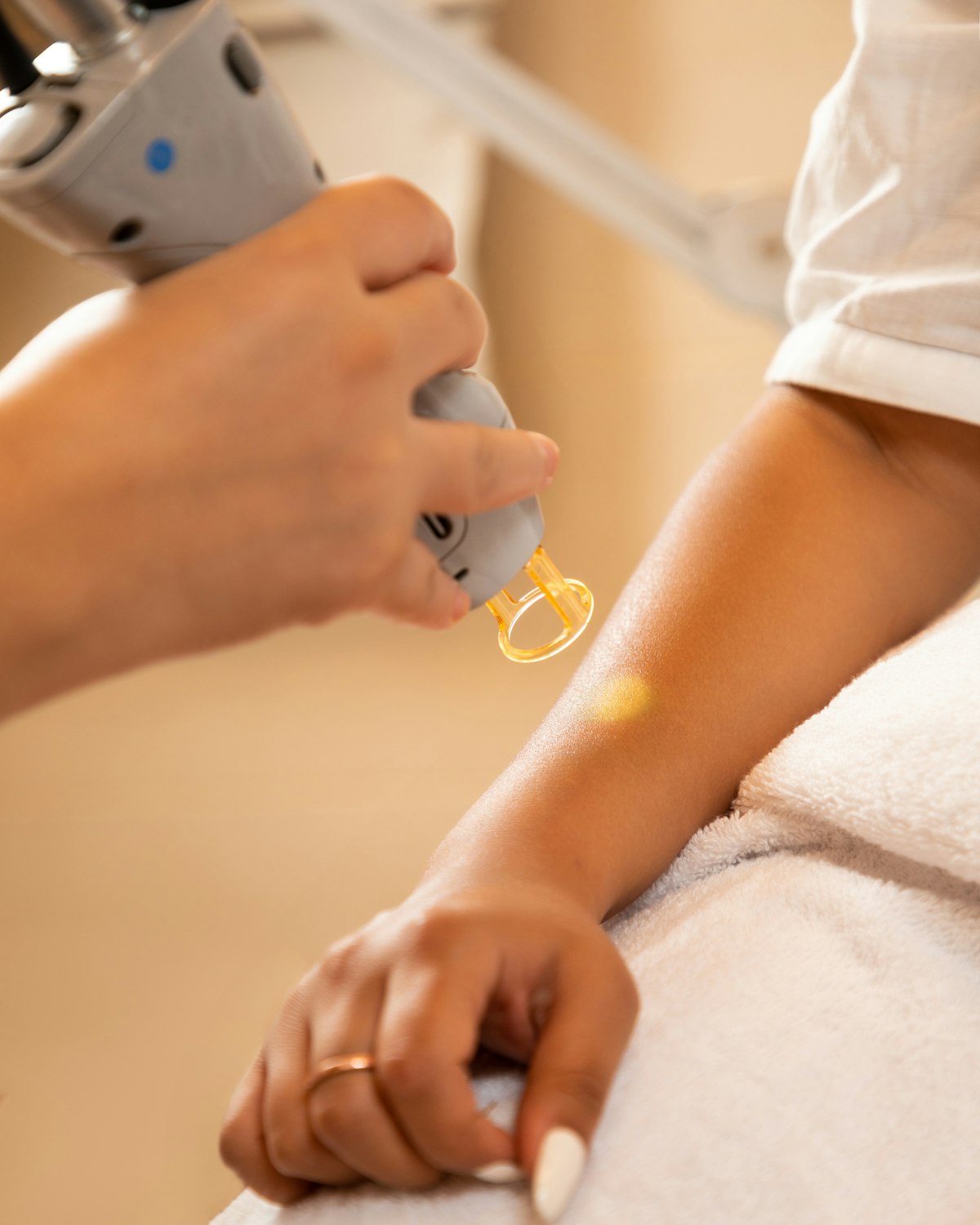
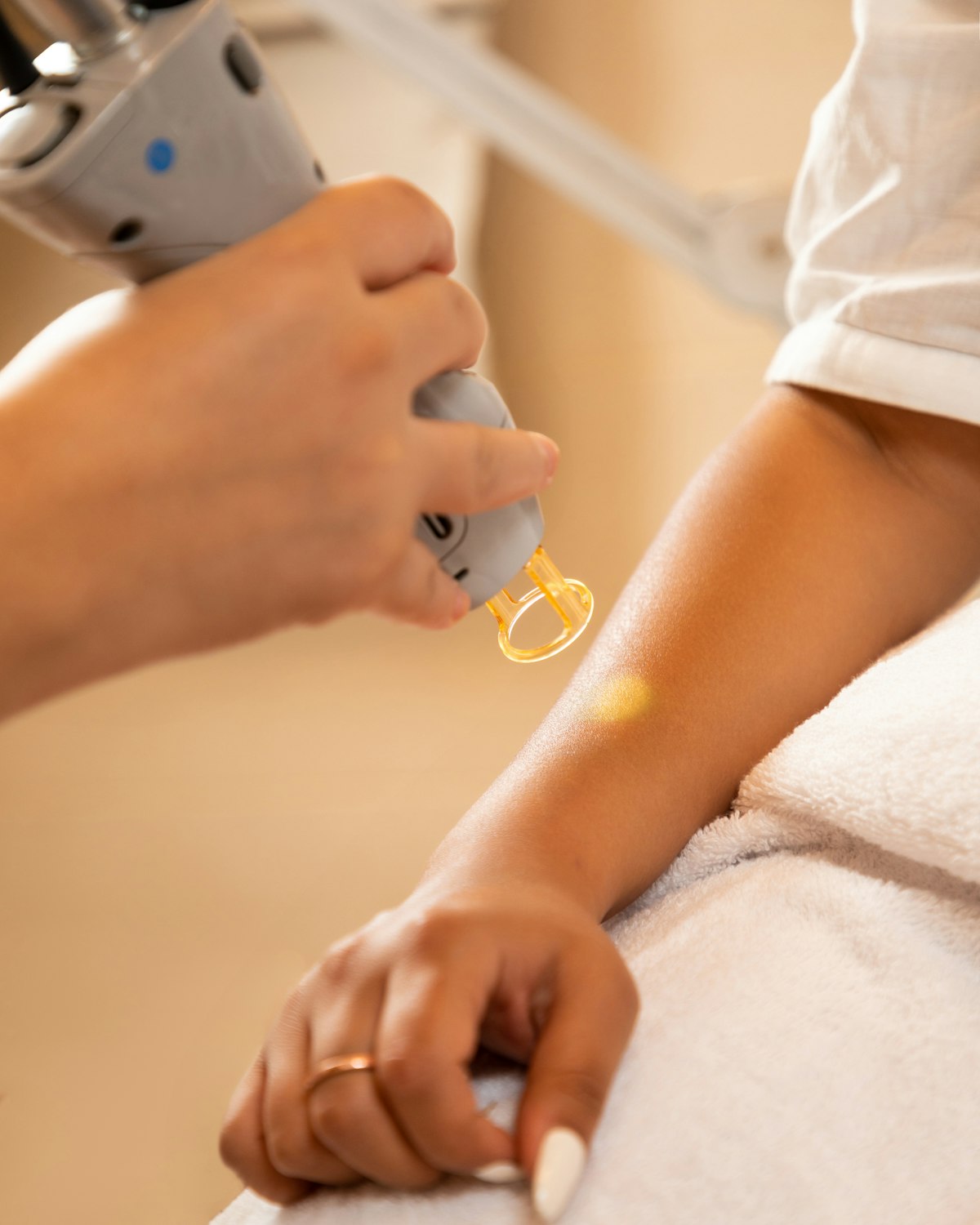
Most adults have between about 10 and 40 moles. Almost all of them are harmless and never need treatment. People ask for removal because a mole is on the face, catches on clothing, a razor or jewellery, or simply bothers them. Less often, a mole is removed because it has changed and needs to be tested for skin cancer. This guide explains the warning signs to look for, the main removal methods, what healing and scarring to expect, and why a mole should never be removed at home.
The short answer
Most moles are harmless and can be left alone. Removal is a choice, unless a mole looks unusual.
A mole that is changing, bleeding, itching or looks different from your other moles should be checked by a doctor before any cosmetic treatment.
Suspicious moles are cut out completely (excision) and sent to a laboratory to be examined under a microscope.
Small, raised moles that look harmless can often be shaved flat or removed with a laser or radiofrequency device, usually in a single visit under local anaesthesia.
Every method leaves some mark. Most wounds heal in about one to three weeks, and the scar keeps fading for months.
When a mole needs checking first
Use the ABCDE guide, and see a doctor if a mole shows any of these:
A for asymmetry: the two halves do not match.
B for border: the edge is ragged, blurred or irregular.
C for colour: uneven colour, or several shades such as brown, black, red, white or blue.
D for diameter: larger than about 6 mm (the size of a pencil eraser), although melanomas can be smaller.
E for evolving: the mole is changing in size, shape, colour or height.
Also get a mole checked if it bleeds, oozes, itches, crusts or hurts without being injured, if a new mole appears after about the age of 30, or if one mole looks different from all the others (the "ugly duckling" sign). A mole that grows back after removal should be seen again promptly.
Removal methods at a glance
Best for. Surgical excision: Suspicious moles, deeper or flat moles, moles that came back. Shave removal: Small raised moles that look harmless. Laser or radiofrequency: Small, harmless-looking moles, often on the face.
How it is done. Surgical excision: Cut out with a small margin, closed with stitches. Shave removal: Shaved level with the skin. Laser or radiofrequency: Mole tissue removed layer by layer with energy.
Laboratory testing. Surgical excision: Yes, the whole mole. Shave removal: Yes, a sample. Laser or radiofrequency: Usually no sample to test.
Stitches. Surgical excision: Yes, usually removed in 5 to 14 days. Shave removal: No. Laser or radiofrequency: No.
Mark left. Surgical excision: A fine line scar. Shave removal: A small flat, often paler spot. Laser or radiofrequency: A small spot, sometimes paler or darker for a while.
Chance of coming back. Surgical excision: Lowest. Shave removal: Some. Laser or radiofrequency: Some.
These are typical. The doctor chooses the method after examining the mole.

Why testing matters
Removing a mole by laser, radiofrequency or burning destroys the tissue, so nothing is left to examine. If an unusual mole is treated this way, an early skin cancer can be missed and cells left behind. For this reason:
Any mole with warning signs should be excised and sent for testing, not lasered.
Laser or radiofrequency removal is only used for moles a doctor has examined and judged to look harmless.
Ask whether the removed tissue will be sent to a laboratory, and how you will receive the report.
What happens on the day
The doctor examines the mole, often with a magnifier called a dermatoscope, and may photograph it with your consent. The skin is cleaned and numbed with a small injection of local anaesthetic, so the procedure itself should not hurt. Removal of a single mole usually takes 15 to 30 minutes. You can usually drive home and return to work or college the same day.
Healing and aftercare
Keep the area clean and covered as advised, often with petroleum jelly and a small dressing, changed daily.
Avoid soaking the wound in a bath or swimming pool until it has healed, and do not pick at scabs.
Stitches, if used, are removed after about 5 days on the face and up to about 2 weeks on the body.
Most wounds heal in about one to three weeks. The scar is often pink at first and fades over several months.
Protect the healed area with sunscreen, because sun exposure can darken the scar.
A slight sting or tenderness for a few days is common. Contact the clinic if bleeding does not stop with firm pressure for 15 minutes, or if you notice increasing redness, warmth, swelling, pus or fever.
Risks to discuss
A visible scar, which may be wider, raised or darker in some people, especially on the chest, back and shoulders, or in people who form keloids.
A change in skin colour at the site, lighter or darker.
Infection or bleeding.
The mole growing back, especially after shave or laser removal.
Rarely, injury to a small nerve, causing numbness in the area.
Why you should not remove a mole at home
Creams, "mole remover" pens, acids, threads and cutting at home can leave deep burns, infection and scars that are worse than the mole. They also destroy the mole without testing it, so a skin cancer can be missed. Regulators have warned against these products.
Questions worth asking at your consultation
Does this mole look harmless, or should it be tested?
Which method do you recommend for this mole, and why?
Will the tissue be sent to a laboratory?
What kind of scar should I expect, given where the mole is?
What is the chance it will come back?
Can more than one mole be removed in the same visit?
Planning your consultation
Bring a list of medicines, especially blood thinners such as aspirin, and tell the doctor if you form keloids, have diabetes, or have had skin cancer or many unusual moles in the family. Photographs that show how a mole has changed are useful. Read more about laser mole removal and blemish removal at Sparsh, or see How to choose a plastic surgeon in Nashik.
Dr. Sachin B. Wagh is a plastic surgeon with D.N.B. and M.Ch. in plastic surgery and more than 15 years in practice. At Sparsh Clinic, the first visit is a private consultation: examination, medical screening, photographs with your consent, and a direct recommendation.
To book, call Sparsh Plastic & Cosmetic Surgery Clinic on +91-253-2319098 or use the contact form at sparshnashik.com. The clinic is at Vaijayanti Apartments, opposite IMRT (KTHM College), Gangapur Road, Nashik 422002. OPD is Monday to Saturday, 8:00 am to 8:00 pm.
This guide is general information for people considering a consultation. It is not a diagnosis or a promise of a result. Any mole that is changing or looks unusual should be examined by a doctor; healing times are typical ranges and individual healing varies.